
From static analysis to real-time observation
Industrial quality control and materials research rely heavily on static Computed Tomography (CT analysis). A sample is typically scanned in its normal state or post-mortem. While powerful, this conventional CT testing approach leaves critical gaps. Transient or reversible phenomena, such as dynamic fluid redistribution, elastic deformation, or rapid degradation, are easily missed.
To bridge this gap, progressive CT testing protocols are transitioning from static observation to dynamic in-situ testing using advanced CT analysis.
Understanding In-situ terminology
In In-situ testing, precise terminology categorizes different testing methodologies:
- Ex-situ CT: CT testing scans taken outside the operational environment under static, laboratory-controlled conditions (e.g., pre- or post-testing dimensional inspection).
- In-situ CT: In-situ testing scans acquired while external stimuli, such as mechanical force, pressure, or thermal testing, are applied to simulate real-world service environments.
- Operando CT: The most rigorous form of in-situ testing, where the sample actively performs its intended function (e.g., electrochemical charge/discharge cycling or active fluid filtration) continuously during 3D tomographic acquisition.
- Temporal classification: When time is integrated alongside 3D spatial volumes, dynamic CT analysis is split based on timescales:
- Single-state In-situ CT: Captures a static 3D volume under a fixed, constant operational load.
- Time-lapse CT: Sequentially records full 3D volumes at discrete time intervals between load steps, ideal for slower mechanisms like creep, swelling, fatigue, or slow corrosion.
- Time-resolved (Dynamic) CT: High-speed acquisition capturing rapid events (such as crack propagation or fluid displacement) within a single scan.
Why choose In-situ CT analysis?
Advanced In-situ CT analysis transforms an analytical laboratory tool into an active, predictive evaluation platform. In-situ approach allows for direct internal mechanisms tracking at the exact moment they occur in true-to-life environmental control. Data analysis approaches subsequently allow for quantitative data extraction such as Digital Volume Correlation (DVC) to track and compare volumetric transport over time. Post-processing workflows can be performed across commercially available image-processing softwares.
Executing In-situ analysis with CactuX solutions
Executing successful In-situ or operando CT experiments presents steep engineering challenges. In-situ devices must fit within existing CT systems without affecting the quality of data. Additionally power, fluid, and communication cables must rotate smoothly without tangling or introducing vibration. Finally maintaining thermal and environmental stability while ensuring safety inside the CT cabinet. At CactuX, we specialize in designing and integrating high-performance in-situ hardware and positioning systems designed specifically to conquer these bottlenecks:
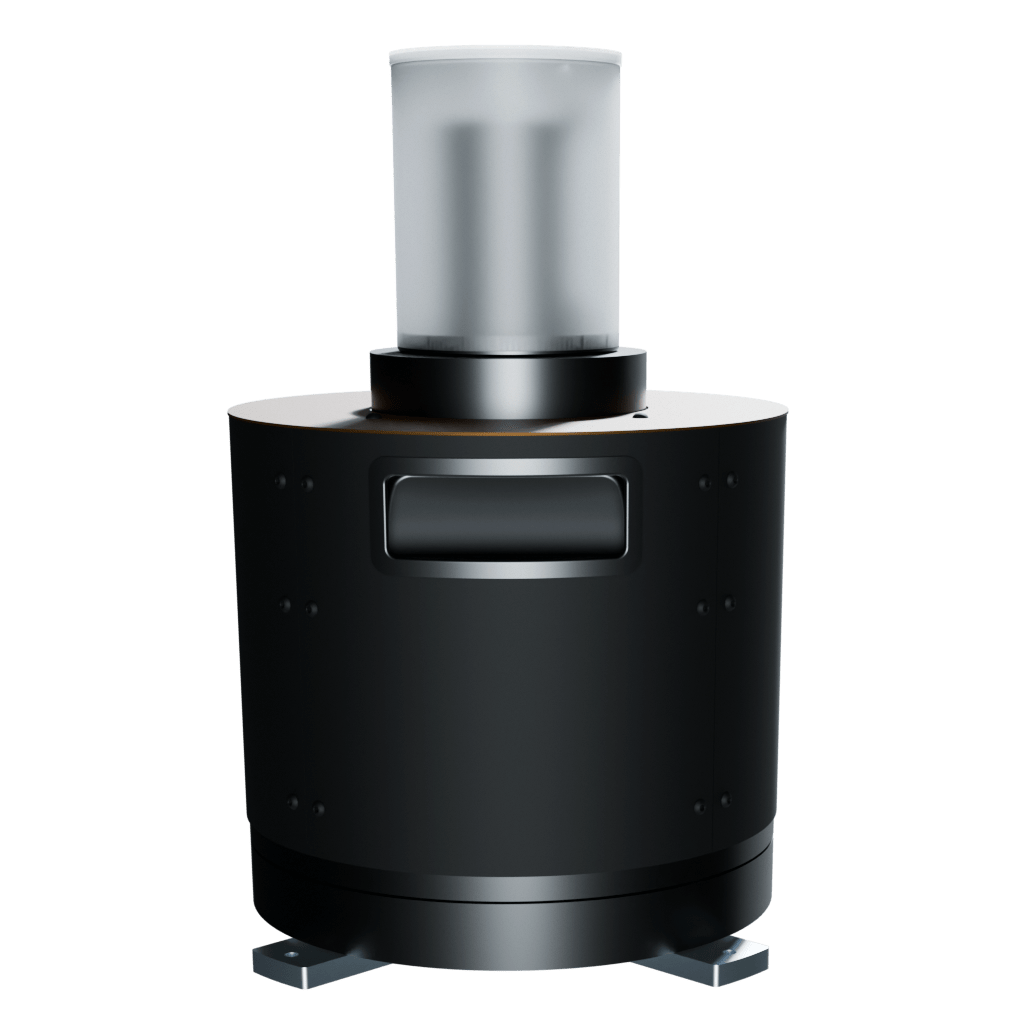

In-situ BOX (Battery and Thermal chamber)
Designed especially for comprehensive battery thermal testing and general thermal environmental control:
- Synchronized Electrical & Thermal Testing: Environmental temperature control ranging from -30° to +60° alongside bidirectional battery cycling up to 8 A / 24 V.
- Seamless CT Integration: Compact (200200405mm, 4.25 kg) with an integrated slip-ring for uninterrupted 360 continuous rotation.
- Validated Research Impact: Proven in operando studies, capturing temperature-dependent electrolyte movement in commercial 18650 Li-ion cells in real time.
High-temperature In-situ BOX (Up to 500°)
When standard environmental ranges are insufficient, our high-temperature stages extend thermal testing capabilities up to 500°. Observe phase transitions, thermal expansion and thermal degradation mechanisms under elevated stress directly inside the CT cabinet.
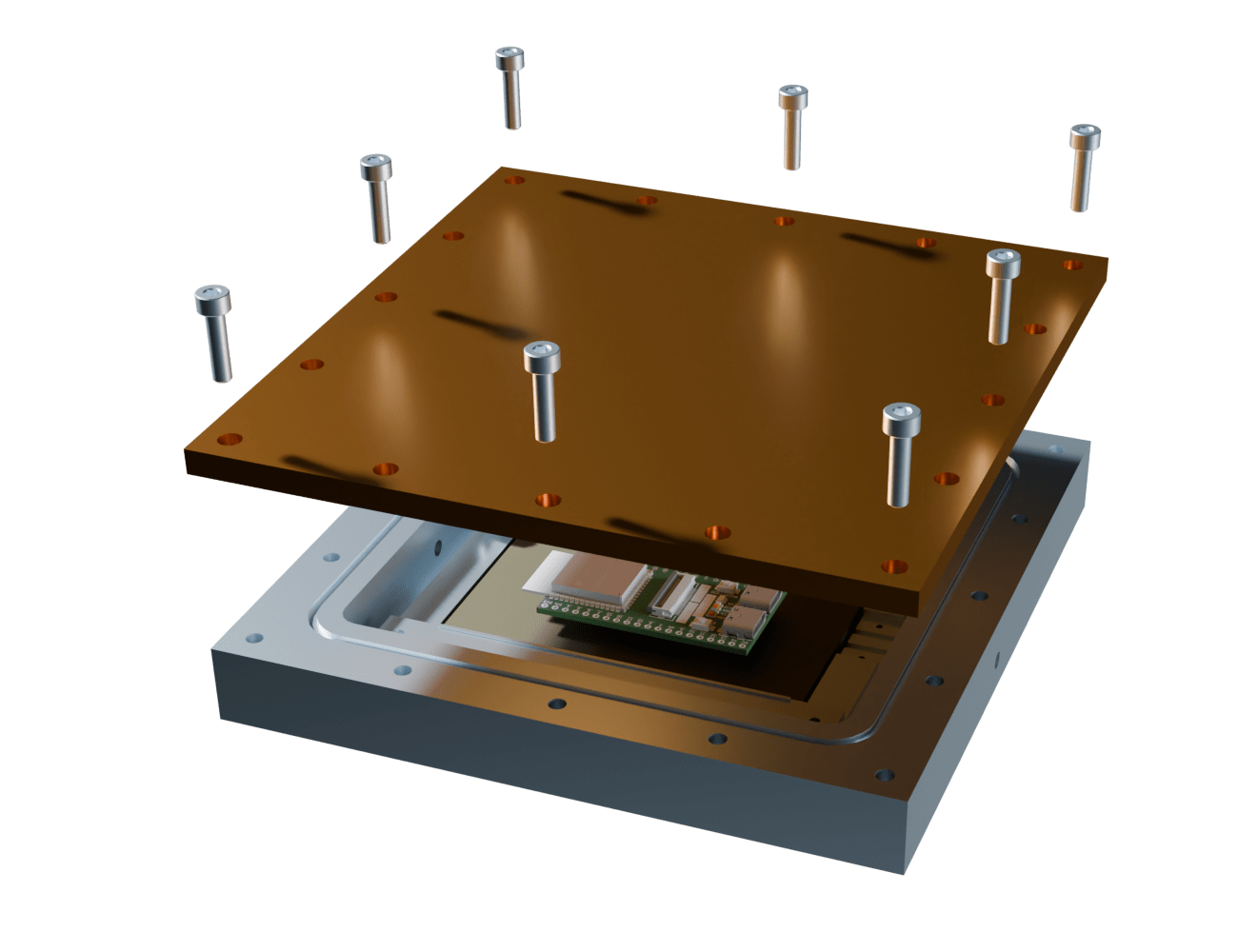
In-situ Soldering BOX (Electronics and PCB Inspection)
When standard environmental ranges are insufficient, our high-temperature stages extend thermal testing capabilities up to 500°. Observe phase transitions, thermal expansion and thermal degradation mechanisms under elevated stress directly inside the CT cabinet.
Mechanical testing In-situ BOX (tensile and compression)
Subject specimens to controlled tensile, compressive, or flexural forces. Measure mechanical stress while running volumetric porosity analysis CT and density analysis CT across progressive load steps.
In cooperation with the Institute of Theoretical and Applied Mechanics, the Czech Academy of Sciences.